Hemp Markets, Building Materials, and the Long Road to Commodity Status
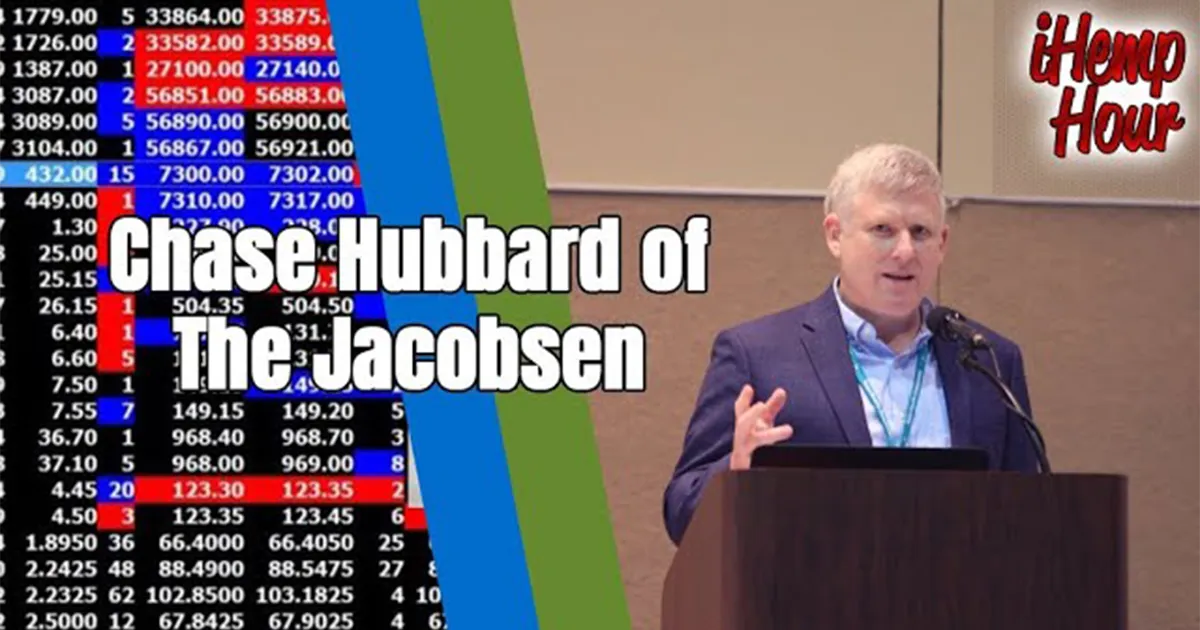
Chase Hubbard of The Jacobsen Returns to Discuss Price Reporting, Biofuels, and Why Hemp’s Regulatory Journey Is Actually Moving Faster Than You Think
The industrial hemp industry often feels like it’s moving at a glacial pace—regulations, approvals, and market development all seeming to crawl forward while opportunities slip away. But according to Chase Hubbard of The Jacobsen (now part of Fast Markets), the historical perspective tells a different story: hemp is actually developing faster than almost any commodity crop in history.
Chase joined hosts Dave Crabill and Blaine Bechtold on this week’s iHemp Hour, alongside cannabis journalist Mike Brennan, for a wide-ranging conversation covering everything from biofuels and automotive applications to the challenges of Delta-8 regulation and why animal feed approval remains frustratingly out of reach.
The Jacobsen: 115 Years of Price Reporting Meets Emerging Markets
Chase Hubbard first joined iHemp Michigan at the inaugural Midwest iHemp Expo in 2020, and a lot has changed since then. The Jacobsen, a Chicago-based price reporting agency with over a century of history, was recently acquired by Fast Markets, a UK-based company focused on emerging technologies.
“Fast markets has taken a position in emerging technologies like biofuels and the elements that make lithium batteries—lithium and cobalt. The hemp fits into that, and so they’ve supported the hemp program, which is a really long-term effort from a price reporting standpoint.”
What does a price reporting agency do? They produce prices used to settle contracts—the kind of boring-but-essential infrastructure that underlies functioning commodity markets. The challenge for hemp? The market doesn’t yet have the transaction volume or liquidity needed for robust price discovery.
“This market just doesn’t have the kind of liquidity, it doesn’t have the transaction volume that you’d see in other agricultural industries as a new industry. But that is going to change eventually.”
Fast Markets’ commitment to the long haul is significant—they understand that building hemp market infrastructure is a multi-year endeavor that could eventually serve both hemp and cannabis operators.
Historical Perspective: Hemp Is Actually Moving Fast
When Dave Crabill expressed frustration that hemp development is “taking too long,” Chase offered a surprising counterpoint:
“Things are happening pretty fast. It’s break stuff and fix it later… Soybeans took decades to develop that crop and then create yields and make farmers say, ‘Okay, I’ll plant that.’ Social media and everything obviously makes things more accelerated today, but I don’t think there’s anything that compares to what we’ve experienced in this industry.”
This iterative approach—where states legalize, encounter unforeseen challenges, and adapt—is messy but historically rapid. As Chase noted, referencing Donald Rumsfeld’s famous phrase about “unknown unknowns,” lawmakers simply can’t anticipate everything that will emerge in a novel industry like hemp.
Biofuels: A Regulatory-Driven Opportunity
The conversation turned to biofuels, an area where The Jacobsen has deep expertise and where hemp could find significant opportunities.
“The reason our company was interested in it is because of the massive investment, the scaling of the petroleum companies to refine renewable diesel, and the policies like in California—the low carbon fuel standards—that really drive this stuff.”
Chase drew a parallel to ethanol:
“Nobody went to the pump and said, ‘We want to put corn fuel in our car.’ But nonetheless, billions of gallons and billions of dollars later, you’ve got a massive industry that was driven by regulation.”
The same regulatory-driven opportunity exists for hemp, particularly on the fiber side. Current biofuel production focuses on fats—animal fats and vegetable oils for renewable diesel—which could eventually include hemp seed oil.
Blaine shared that Down on the Farm has been experimenting with older hemp seed oil that’s gone rancid—unsuitable for human consumption but perfect for alternative uses:
“We’ve found a secondary market for it in tiki torches, and it also will use as biofuels. I’ve got about 300 gallons of old oil that we’re working with… It burns 100% straight, very clean. Sometimes when you use kerosene, you get black smoke—don’t have that with this.”
This represents exactly the kind of creative byproduct utilization that can improve hemp’s overall economics.
Hemp Seed Oil: First Press vs. Hemp Hearts
Blaine demonstrated two types of hemp seed oil during the show:
|
Type |
Appearance |
Flavor |
Best Uses |
|
First Press (whole seed) |
Darker, opaque |
Strong, earthy |
Cooking, biofuels, tiki torches |
|
Hemp Heart Oil |
Lighter, translucent |
Milder, less earthy |
Culinary, cosmetic applications |
The industry is also working on flavor-neutral hemp oil. Victory Hemp has been developing processing methods to remove the distinctive hemp flavor, making the oil more versatile for chefs and food manufacturers.
The Animal Feed Bottleneck
One of the most frustrating regulatory barriers remains animal feed approval. As Mike Brennan pointed out:
“It doesn’t make sense that we can go to the grocery store and buy hemp hearts but we can’t feed it to a cow that we’re going to eat.”
Chase, who serves on the ASTM D-37 Cannabis Committee (Industrial Hemp) and participates in the animal feeds working group, explained the underlying challenge:
“The issue—one of the issues for animal feeds—is the analysis and THC detection levels. This is just a little bit of a disaster for regulators at FDA. They just, regardless of the fact that the THC is negligible, doesn’t matter, we feed it to our children, they still have a need for data. And it’s expensive, it’s challenging, and they’ve had a hard time separating in their minds cannabinoids and hemp seed.”
ASTM International is a standards organization that creates specifications across industries—from building codes to fuel standards. The animal feeds working group is developing analytical standards that FDA can use to move forward.
The Hemp Feed Coalition held a two-day seminar in Washington last fall that Chase described as showing “really good engagement” between industry and regulators. Recordings may be available on their website for those interested.
State-Level Progress
Some states aren’t waiting for federal action:
- Montana has legalized hemp in animal feed
- Texas is discussing similar measures
- Michigan is exploring legislative options through partnership with the Hemp Feed Coalition
The protein-rich cake left over after oil pressing contains 25-32% protein and could be a valuable livestock feed once approved. Currently, there’s a “gray market” where small-scale organic producers use hemp seed for animal feed, but major crushers can’t access automated supply chains for this byproduct.
CBD dog treats, like the peanut butter-flavored biscuits from AG Marvels (featured as this episode’s sponsor), operate in a space where FDA enforcement has been minimal for companion animal products
agmarvels.com
. These treats can help with anxiety and stress in pets—Blaine shared a neighbor’s success story with a dog that had severe separation anxiety
honestpaws.com
.
The Delta-8 Problem
The conversation addressed the elephant in the room: Delta-8 THC and its impact on the broader hemp industry.
“These pop-up markets… it’s amazing how vast that market is. It’s quick, it’s nimble, it’s low risk. They were able to really move a lot of product really quickly. The Delta-8 thing has absolutely confused the issue in state legislatures.”
The problem extends beyond cannabinoid markets. Delta-8 has been “brought into conversations about hemp seed and animals and all kinds of stuff where it is irrelevant,” but legislators struggle to distinguish between different aspects of the hemp industry.
“Legislatures have a marginal ability to understand cannabinoids and the complexities… Right now they’re at the ‘rope not dope’ stage in some of these legislatures like Arizona.”
Chase referenced Arizona’s Republican Majority Leader who used that phrase—indicating a backlash against perceived regulatory manipulation.
Current State Bans
Mike Brennan reported that 15 states have now banned Delta-8, with Arkansas, West Virginia, and Texas preparing to join—potentially bringing the total to 18 states.
The cannabis industry, with its significant financial resources, is actively pushing back against hemp-derived intoxicants that compete with licensed dispensaries. As Dave noted: “They have a lot more money than us.”
Automotive Applications: A Long-Term Opportunity
The discussion touched on hemp’s potential in automotive manufacturing. Mike Brennan, a former Detroit Free Press auto writer, noted that premium automakers like Porsche and BMW already incorporate hemp in plastics for sub-assemblies and interior fiber.
“Ford has been shopping around because they want to get it into their more mid-level vehicles… It’s stronger than steel, it’s lightweight—that’s really what they want. Lightweight burns less fuel.”
Chase offered a measured assessment:
“In Europe, certainly more than the United States… I’m skeptical that there’s going to be a whole lot of movement in the really near term. But some of this funding in the states like the IRA could create some opportunity.”
The key question: Will automakers pursue more complex supply chains without regulatory pressure? With GM targeting zero internal combustion engine vehicles by 2035, and younger consumers shopping for greener options, market forces may eventually align with hemp’s benefits.
Dave shared that iHemp Michigan had a meeting scheduled with Debbie Malinsky from Ford just before COVID hit. Ford has a goal of creating an entirely plant-based vehicle interior. Lear Seating is also reportedly testing hemp fiber for automotive applications.
Building with Hemp: Workshops Launch This Month
A major focus for iHemp Michigan in 2023 is education around hemp building materials. The organization is launching a workshop series called “The Why and How of Building with Industrial Hemp.”
📅 First Workshop Details
|
Date |
Saturday, March 18, 2023 |
|
Location |
Grand River Sailing Club, 219 North Harbor Drive, Grand Haven, MI |
|
Cost |
$40 donation (covers lunch and speaker costs) |
|
Topics |
Hemp building products, applications, and current building codes |
A second workshop is planned for Ann Arbor on April 15th.
The organization is working toward offering continuing education credits for builders and architects—making these workshops count toward professional development requirements.
Blaine recently completed a HempWood flooring installation and praised the material:
“It’s beautiful, it’s hard, it stays up well, handles well, so easy to work with just like any other wood—and here I’m using a green material.”
Cannabis Market Update: $3 Billion and Growing
Mike Brennan provided his regular cannabis market update, noting that despite consolidation pressures from falling prices, Michigan is on track for approximately $3 billion in cannabis sales this year
four20post.com
.
“We do more than $200 million a month now… Prices may be going down, but demand is going up.”
The state recently announced tax revenue distribution to municipalities:
- Ann Arbor (with 40 dispensaries): $53,000 per license)
- Muskegon (29 dispensaries): Significant allocation
- Total distributed: Approximately $140-150 million
Less than 200 of Michigan’s 1,800 municipalities have opted in to allow cannabis sales—but those tax numbers may change minds.
Industry News
- Skymint, Michigan’s second-largest vertical cannabis operation (24 dispensaries), is in receivership with $127 million in debt to Canadian lender Sundial
- Liberty Cannabis is hosting a St. Patrick’s Day event in downtown Detroit on March 19th ($3.13 admission—area code 313)
- Hash Bash returns to Ann Arbor on April 1st, coinciding with the U of M football spring game—expect 100,000+ visitors
Remembering Rob Roebar (1969-2023)
The Michigan hemp and cannabis community lost a beloved figure with the passing of Rob Roebar on March 7, 2023. He was 54 years old
four20post.com
.
Rob was the founder of multiple companies including Fancy, Headway Graphics, Heady Times, Helping Friendly Hemp Company, and Weekapaug Collective. He was an advocate for alternative plant medicine including CBD, cannabis, and mushrooms.
Dave Crabill, former president of the Hero Project (where Rob served on the board), shared his memories:
“I just saw him post to Facebook the week before he died and then he’s gone. Kind of made us all think—you enjoy every day because one day you won’t be around.”
A GoFundMe has been established to support Rob’s daughter Lauren, who is attending Grand Valley State University. The link is available on iHemp Michigan’s Facebook page, YouTube channel, and LinkedIn.
State Regulatory Comparison: Is USDA the Better Path?
Dave Crabill has been researching hemp regulations across different states, prompted in part by issues raised by Michael Tui (who was watching live). The discovery that someone merely cleaning seed for a hemp grower needs a processor/handler license struck Dave as regulatory overreach.
“We can’t support a program with 50 growers… Let’s throw it back to the USDA. USDA—there are no fees to grow. There’s testing fees, which is understandable, and if we get the set-aside for fiber and grain, then there won’t even be that.”
Dave recalled that Senator Lauwers, speaking at iHemp Michigan’s first event in January 2019, said the current regulatory framework wasn’t what he wanted—it should be a commodity crop with no cost to grow.
The comparison across states shows:
- Michigan: Among the higher-cost state programs
- Kentucky: Significant selling restrictions (no hemp cigars/cigarettes—not surprising in a tobacco state)
- Other states: Fees ranging from equal to Michigan to a third of the cost
Dave plans to publish a full report on state regulatory comparisons on the iHemp Michigan website.
Recipe: Tournament-Ready Hemp Guacamole 🥑
With March Madness tipping off, Blaine shared a perfect game-day recipe from the Hemp Nut Cookbook:
Hemp Seed Guacamole
Makes about 2 cups
Ingredients:
- 2 large ripe avocados
- 1 tablespoon fresh lime or lemon juice
- 2 medium tomatoes, small dice
- ¼ cup minced shallots or red onion
- 1 clove fresh garlic, minced
- ¼ – ½ cup shelled hemp seeds (Blaine recommends going heavier!)
- Sea salt to taste
- Fresh cilantro
Instructions: Mix all ingredients together and serve with your favorite chips.
Pro tip: Short on time? Use pre-made guacamole mix with diced tomatoes already included, then add the hemp seeds. Your guests will never know the difference!
Find hemp hearts for your recipes at DownOnTheFarm.biz, which also carries hemp seed oil and hemp animal bedding.
Looking Ahead
Chase Hubbard’s timeline for hemp achieving true commodity status? Five years minimum—but progress will be steady, and regulatory changes could accelerate things unexpectedly.
The keys to watch:
- Animal feed approval through ASTM standards development and Hemp Feed Coalition advocacy
- Automotive industry commitments to sustainable materials
- State-level action on feed legalization
- Federal farm bill provisions for fiber and grain set-asides
As Chase noted, the infrastructure being built now—price reporting, standards development, regulatory frameworks—is “the kind of boring things that underlie functioning markets.” That boring work is exactly what transforms an emerging industry into a mature one.
Events & Resources
📅 March 18 — “Why and How of Building with Industrial Hemp” Workshop, Grand Haven, MI ($40)
📅 April 1 — Hash Bash, Ann Arbor (coincides with U of M Spring Game)
📅 April 15 — Building with Hemp Workshop, Ann Arbor (details TBA)
📅 NoCo Hemp Expo — Coming soon for those attending
🔗 Down on the Farm — DownOnTheFarm.biz (hemp hearts, oil, bedding)
🔗 AG Marvels — Heirloom Grow products including CBD dog treats
agmarvels.com
🔗 Hemp Feed Coalition — Resources and recorded seminars on animal feed approval
🔗 Rob Roebar Memorial GoFundMe — Available on iHemp Michigan social media
🔗 Sparks and Recreation / 420 Post — Mike Brennan’s cannabis industry coverage
Growing the future from seeds of the past.