
Building the Future: Hemp Construction Gets Its Code—and Michigan Is Ready
Ray Kaderli of US Hemp Building Association Shares How New ICC Approval Opens Doors for Hempcrete Homes
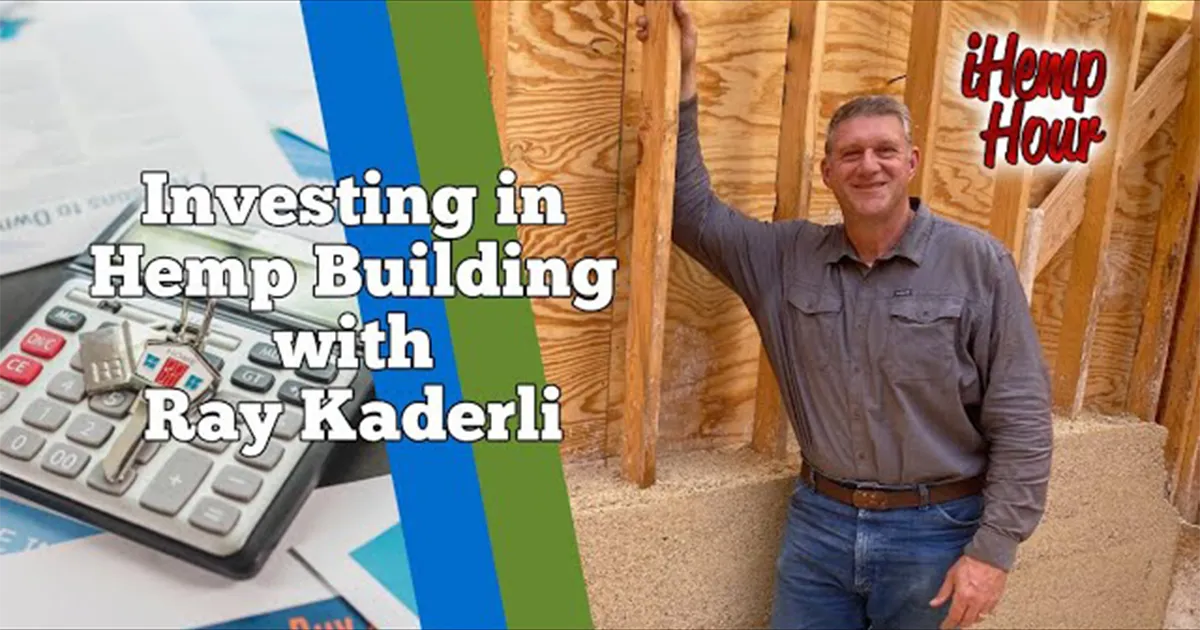
The industrial hemp building revolution just got its official rulebook. In this episode of iHemp Hour, Ray Kaderli, incoming president of the US Hemp Building Association (USHBA) and founder of Hemp Building Network LLC, joined hosts Dave Crabill, Blaine Bechtold, and Mike Brennan to discuss the game-changing ICC code approval for hempcrete and what it means for builders, architects, and the future of sustainable construction.
The ICC Code Approval: A “Slow-Moving Unboxing Video”
Last fall, the International Code Council (ICC)—the organization that establishes building codes adopted across the United States—officially approved hemp as a building material. This represents years of effort from advocates who invested “blood, sweat, and tears” into making it happen.
Ray describes the coming year as a gradual process of understanding what these new codes actually mean in practice:
“The next year I see as kind of like a slow-moving unboxing video… taking those codes out, unpacking them, seeing what they are. If you had never seen anything related to hemp in construction and you just read through that, it might be a little tough to discern exactly what’s what.”
What the Code Actually Allows
Hempcrete (a mixture of hemp hurd, lime binder, and water) is now approved for use as:
- Insulation – providing approximately R2 per inch, though Ray notes it “performs so much more than that”
- Substrate for plaster – the material that sits behind your interior and exterior finishes
Important technical note: Hempcrete is used in non-load-bearing (infill) walls. The structural frame of the building still carries the load, while hempcrete provides superior insulation and creates the surface for finishing with vapor-open lime plaster.
“It’s not a cement stucco—that’s important to know. The code has a lot of definitions for different scenarios.”
Before the Code: How Projects Got Built Anyway
Ray’s own project in San Antonio—a 1,300-1,400 square foot home using over 20,000 pounds of hemp—was permitted before the code passed. How? Through engineering stamps.
For an engineer to certify hemp building materials, two critical pieces of data are needed:
- R-value (thermal resistance) – extrapolated from European testing
- Fire rating – established through fire tests conducted roughly two years ago
“There’s a very low bar of risk to them. It’s not like a bridge is going to fail and people are going to die. Worst case scenario, people might be a little hotter in the summer and colder in the winter.”
Even with the new code in place, Ray still recommends getting an engineer’s stamp because it “takes all the pressure off of the municipal governing authority. If anything goes wrong, it’s the engineer’s fault—that’s where the lightning will go.”
Hemp Hurd Quality: What Builders Need to Know
Hurd (sometimes spelled “herd”) is the woody inner core of the hemp stalk—the primary material in hempcrete. When asked about specifications, Ray emphasized that working with hempcrete is similar to bread-making or hand-mixing concrete:
“It’ll tell you when it’s ready. It’ll tell you when it’s too wet or too dry.”
Key Quality Indicators for Hemp Hurd:
|
Factor |
Why It Matters |
|
Particle size |
Consistency in mixing and application |
|
Dust-free |
Dust throws off moisture ratios, causing adhesion problems |
|
Fiber-free |
Fiber balls create pockets in walls and affect moisture |
|
Color |
Should be “nice blonde”—darker color indicates age or potential mold |
Third-party testing is essential. Ray mentioned Fast Laboratories in Arkansas as one facility both major domestic suppliers currently use. The French cooperative that produces imported hurd includes an orange certification sticker indicating internal quality standards have been met.
“What we need with a standard is… we all need to be able to sue each other, and it’s okay. Because if something bad happens, that electricity is going to flow back upstream.”
Standards create accountability throughout the supply chain—protecting builders, suppliers, and homeowners alike.
The Supply Chain: Chicken, Egg, and Co-ops
One of the biggest challenges facing hemp construction is the classic chicken-and-egg problem: farmers won’t grow without guaranteed buyers, and processors won’t scale without guaranteed supply.
Michigan’s Current Landscape
Blaine Bechtold shared that iHemp Michigan is working with Michigan State University and the Midwestern Hemp Research Collaborative to recruit experienced grain and fiber growers:
- Looking for 5 growers per Midwestern state
- Plot sizes of 5-20 acres
- Seed provided plus approximately $500 stipend
- Focus on farmers with some hemp growing experience
Additionally, Cody Lay of Hemp for Humanity (H4H) is working to form a Michigan co-op and has contracts available for fiber growers this year.
Ray’s Co-op Advice
“A co-op really works well when there’s an end consumer that will take all of that off-take.”
The model works best when there’s a major buyer—like an automotive manufacturer—ready to absorb production. In France, the Chanvrière cooperative sells most of its fiber to Renault Automotive, leaving mountains of hurd as a byproduct for construction.
“The herd is almost a byproduct that gets sold at a really nice appealing price. Finding uses for fiber like automotive dash parts and door panels will do nothing but bring the price of hurd down.”
The Auto Industry Connection
Michigan’s automotive heritage may prove crucial to hemp’s future. Mike Brennan noted that Lear Corporation—a major Tier 1 supplier to Ford—has been exploring hemp composites for vehicle interiors and exteriors.
“Ford’s still experimenting with it. They’d like to bring it into the mainstream cars, not just the most expensive cars.”
The challenge? Scale. When a major manufacturer commits, they need thousands of acres under cultivation—not boutique batches.
“If they’re going to ramp up and change their manufacturing, they don’t want to boutique-manufacture something. They want to manufacture something.”
Banking, Insurance, and the “Sober Cousin” Problem
Despite dealing with the non-psychoactive, woody part of the plant, hemp builders face the same banking restrictions as cannabinoid producers.
Ray shared his frustration:
“I’m buying the woody part of the plant and I’m making a house with it, and I cannot get a bank account. I’ve had a bank account there since I’ve had a driver’s license.”
He was even told not to put “hemp” in his business name—though that doesn’t solve the compliance questionnaires banks require.
The SAFE Banking Act and clearer federal regulations remain critical needs. As Ray noted, the industry is seeking “clarity on separating grain and fiber from cannabinoid production” because the risk profiles are fundamentally different.
“On the construction side, we’re kind of the sober cousin that gets brought to the party—and we like that.”
Education: USHBA and iHemp Michigan’s 2023 Plans
Education is the top priority for both organizations this year.
iHemp Michigan Events
|
Date |
Event |
Location |
|
📅 February 11 |
Meet & Greet after Lakeshore Expo |
Big Lake Brewing, Holland, MI (~6 PM) |
|
📅 March 11 |
Full-day hemp building workshop |
TBD (possibly Lawrence Technological University) |
|
📅 Summer 2023 |
“Field Days” at active build sites |
Various Michigan locations |
The workshops will cover:
- History of hemp building materials
- What’s available and how to use it
- Hands-on samples (including the popular heart-shaped hempcrete molds!)
These sessions lead into summer field days where participants can visit active construction sites to “touch it and see how it’s all done.”
USHBA at South by Southwest
The US Hemp Building Association will be:
- Speaking on a panel
- Exhibiting with corporate members
- Hosting an after-party with hempcrete demonstrations at a local brewery
Target Audiences
Ray emphasized reaching out to:
- National Association of Home Builders (NAHB) local chapters
- American Institute of Architects (AIA)
“Everything has to be on a pathway to production, or else we don’t get the large impact—environmental stewardship and health of a society from living in these houses.”
Local builders’ associations hold regular meetings and are receptive to presentations on new materials—especially ones with ICC code approval.
Michigan Projects to Watch
Jesse Decker’s Healthy Home Build
One of iHemp Michigan’s “champion causes” this year involves Jesse D. Decker, who—along with a friend—experiences severe allergic reactions to conventional building materials.
“Every time they go rent somewhere, they’re getting into a situation where it’s toxic for them.”
A fundraising campaign launches in May 2023 for a hemp-based home that won’t trigger their sensitivities. Ray offered to connect the project with consultants who specialize in designing for chemical sensitivity.
Kim Crows and Fiberfork
Kim Crows of Fiberfork continues advancing hemp building projects in Michigan and will be connecting with Ray at South by Southwest.
Other Industry News
FDA Punts on CBD Regulation
The FDA announced it cannot regulate CBD under existing frameworks, pushing the issue back to Congress. With current Congressional gridlock, legislative solutions may be slow to materialize.
Farm Bill Opportunities
The 2023 Farm Bill presents opportunities to:
- Clarify regulations for grain and fiber (separate from cannabinoids)
- Advance hemp in livestock feed (poultry research is furthest along)
- Establish clearer banking guidelines
NOCO Hemp Expo
📅 March 29-31, 2023 📍 The Broadmoor Hotel, Colorado 💡 Volunteers needed—a way to attend at reduced cost
Cannabis Industry News (via Mike Brennan)
- Mardi Gras Party: February 21 at Causeway Bay Hotel, Lansing. Free entry, VIP bags $75.
- Midwest Cannabis Nurses: Free classes on CBD/cannabis prescribing in lieu of opioids (February 4 and March). Details at 420post.com.
- Sparks and Recreation: Mike’s new cannabis tourism publication at sparksandrec.com.
Recipe of the Week: Canna-Smoked Chicken Wings
Perfect for game day! Blaine shared his personal recipe:
Ingredients:
- 3 lbs chicken wings
- 1 cup hemp seed oil (available at DownOnTheFarm.biz)
- ¼ cup barbecue chicken rub
- 1 cup favorite barbecue sauce
- ½ cup lager or ale (optional)
Instructions:
- Combine all ingredients
- Marinate overnight (essential for flavor)
- Smoke low and slow
How to Get Involved
Join iHemp Michigan: Visit iHempMichigan.com to become a member and stay informed about workshops, field days, and advocacy opportunities.
Connect with USHBA: Building professionals should visit ushba.org to access member benefits and technical resources.
Grow Hemp for Research: Contact iHemp Michigan about the MSU/Midwestern Hemp Research Collaborative grower program.
Grow Fiber Hemp: Reach out to Cody Lay at Hemp for Humanity (H4H) about 2023 contracts.
Thank You to Our Sponsors
- Icon Processors – CBD creams, lotions, and Valentine’s Day gift ideas
- Down on the Farm – Hemp hearts, hemp seed oil, and animal bedding (DownOnTheFarm.biz)
The hemp building industry stands at a pivotal moment. With ICC codes now in place, domestic supply chains developing, and education efforts accelerating, the path from “Is this even possible?” to “Where do I sign up?” is getting shorter every day.
As Ray put it: “The baby steps we’re taking where we don’t fall are extremely strategic—because once the baby learns to run, there’s going to be a lot of fun to be had.”
Growing the future from seeds of the past.