Pineapple Grilled Salmon & Policy Battles: Navigating Hemp’s Crossroads
Colorado’s 39 Amendments, State-by-State Feed Approvals, and Why the Hemp Industry Must Stay Vigilant
The industrial hemp industry finds itself at a critical inflection point. While breakthrough approvals for hemp animal feed are opening new markets in Kentucky and Texas, troubling legislative developments in Colorado serve as a stark warning about what happens when stakeholders aren’t in the room where decisions are made.
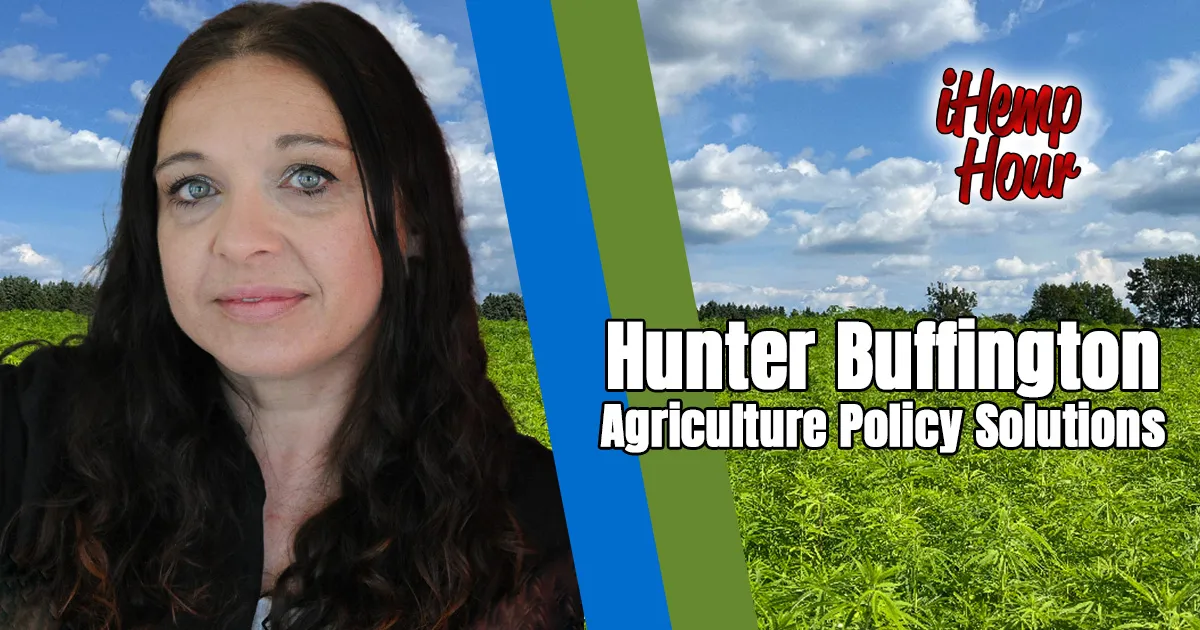
On this week’s iHemp Hour, Hunter Buffington, Director of Agriculture Policy Solutions and a 10-year hemp industry veteran, joined hosts Dave Crabill and Blaine Bechtold to unpack both the victories and the cautionary tales shaping hemp’s future.
Breaking News: Hemp Feed Approved in Kentucky and Texas
In what may be the most significant state-level development for hemp grain markets this year, Hunter Buffington announced that hemp seed meal and hemp seed oil have been approved for all life cycles of chickens in Kentucky and Texas, along with approval for horses in both states.
“We have some exciting news… We completed applications for all life cycles of chickens—hemp seed meal and hemp seed oil—in Kentucky and by memorandum in Texas. No one knows this because we haven’t really told anyone.”
This accomplishment fulfills a dream of the late Steven Turetsky of Santa Fe Farms and Filament Six Dynamics, whose vision for getting chickens fed hemp is now becoming reality.
Why These Two States Matter
The strategic selection of Kentucky and Texas wasn’t accidental:
|
State |
Strategic Advantage |
|
Kentucky |
Established hemp supply chain infrastructure for human food; processors already in place ready to add revenue streams |
|
Texas |
Large-scale agriculture potential; existing cotton ginning infrastructure that could be repurposed; strong rope cropping opportunities; influential rodeo/horse community already embracing hemp products |
“Kentucky’s got a lot of this infrastructure in place… Texas is just a whole different environment. When you say Texas approved hemp as animal feed, it’s just a different conversation than if you say Kentucky.”
The horse community in Texas has been particularly receptive, with the rodeo circuit reporting positive experiences using hemp products for roping horses and cutters.
The Path Forward for Other States
Buffington explained that the approval process worked directly with state Departments of Agriculture and feed control officials—not through legislative policy channels:
“It was presented directly to the regulators along with all of the analytical chemistry that they needed to know that they could actually enforce safety and look at these products.”
For Michigan: Dave Crabill committed to exploring whether Michigan’s regulators would review new ingredient definitions using this same approach. With Michigan’s significant poultry industry, this represents a major opportunity.
Federal Progress: USDA Cattle Feed Study Shows Promise
Adding momentum to the animal feed conversation, the USDA and North Dakota State University recently released research showing hemp seed cake as a viable alternative for cattle feed.
The study, which fed cattle for 111 days, found that concentrations of compounds in meat products secured only a small fraction of what global regulatory organizations consider safe for consumers regarding CBD and THC levels.
“This is awesome… We’re getting some movement there,” noted Blaine Bechtold.
Meanwhile, the Hemp Feed Coalition (HFC) continues its work toward FDA Center for Veterinary Medicine acceptance of hemp for laying hens—a process Buffington described as “any day now” after years of effort.
Colorado’s Cautionary Tale: When 39 Amendments Unravel Stakeholder Work
The celebratory mood shifted when Buffington detailed what she called a “textbook” example of emerging industry barriers gone wrong—Colorado’s recent hemp legislation.
What began as a bill to control intoxicating cannabinoids, developed through historic stakeholder collaboration between hemp and marijuana industries, transformed into something unrecognizable after 39 floor amendments were added in just two weeks.
“We went to the Senate hearing thinking we were actually going to be celebrating unification between the marijuana and the hemp industry… and 39 amendments later it’s unrecognizable. It could literally pull full spectrum whole plant products off the shelves.”
The Problematic Provisions
The 20:1 Ratio Requirement: For consumers under 21, products must maintain a 20:1 CBD to THC ratio—a standard that forces whole-plant extractors to dilute their formulations with added CBD.
“My farmers that have been working on their genetics since the beginning—years of investment and hard work and risk—their formulations are going to have to be diluted in order to meet that 20:1 ratio. And that was acknowledged by the amendor.”
“Zero” THC Language: Buffington warned about regulators using “non-detectable” or “zero” limits:
“When the word zero is used by regulators, that’s incredibly problematic. We all know it’s 0.3 percent Delta-9 THC in our world. Telling us that zero is a number is not achievable.”
Age Gates for Established Products: Products that have been safely on shelves since 2014 with no poison control or toxicity reports are now facing access restrictions.
Who Benefits?
When asked about the forces behind these changes, Buffington didn’t mince words:
“Politicians saying they’re saving the children, protecting them from THC, while also allowing the export of products that are banned in our state to be safe harbored—that really should be questioned.”
She noted that influence came from both the marijuana industry (seeking to pull products into dispensaries) and other special interests, with very limited actual hemp stakeholder representation in the amendment process.
The Governor’s Desk
The bill currently sits with Colorado Governor Jared Polis. Buffington’s understanding is that he won’t sign it, but also won’t veto it—allowing it to become law through what Colorado calls a “desk approval” (the opposite of a pocket veto).
Rulemaking will follow, and the question remains whether genuine stakeholder input will be incorporated or if decisions will be made “behind closed doors.”
The Farm Bill Connection: Why State Actions Matter Now
Buffington expressed deep concern about state-level THC restrictions spreading while federal Farm Bill considerations are underway:
“I am very concerned about this rhetoric that I’m hearing. It almost absolves them from looking at science—and we’ve been down that road before.”
The pattern of “Reefer Madness” rhetoric overriding scientific evidence echoes across multiple states and threatens to influence federal policy.
DEA Pushing Back
Adding to industry concerns, Mike Brennan of the 420 Post noted the DEA is again advocating to change the THC threshold from 0.3% to 0.1%—moving in the opposite direction from the industry’s push toward 1%.
What the Industry Can Do: Dollars, Demand, and Education
Despite the challenges, Buffington offered a roadmap for resistance:
- Educate Retailers
“This is one of those moments in the history of hemp where we really need to educate our retailers… If a retailer says ‘oh this might have THC in it’—if they have a product that says it’s not 20 to 1, do they put it behind locked doors by the cigarettes?”
- Vote With Your Wallet
“The best way to combat Reefer Madness is with our dollars. Demand that those products are still there… If we get some retailers with some clout to say ‘we’re not moving these products—these products have been on our shelves for five years, they’re staying’—Whole Foods, Natural Grocers—just a little pressure.”
- Show Up and Speak Up
“Make sure that we’re present. Make sure they’re not talking to two people that are representing all of us—because it’s happening.”
Michigan Market Updates
Biomass and Distillate: Supply Finding Demand
Dave Crabill shared encouraging news for Michigan farmers sitting on inventory:
“We have people currently looking for biomass and calling us… Some of the biomass we’re dealing with—even if it wasn’t a well-maintained crop for CBD content—because it has seeds in it, it has great nutritional value.”
If you have biomass, distillate, or crude you need to move, contact iHemp Michigan.
CRA Rule Changes Under Review
Michigan’s Cannabis Regulatory Agency has released 33 pages of proposed rule changes open for public comment. The key provision affecting hemp:
“The conversion of intoxicating cannabinoids… CBD to THC and the sale or transfer of these items unless the CRA approves conversion subject to specified parameters including submission of peer-reviewed studies.”
Civil Service Drug Testing Reconsidered
Michigan is accepting public comments on proposed changes to state drug testing regulations—driven largely by recruitment challenges when qualified candidates use legal CBD products.
Pennsylvania Secures $1 Million Hemp Grant
In a creative funding approach worth watching, Vital Plant Science Research in Pennsylvania received a $1 million Regional Innovation Engines development grant through the CHIPS and Science Act to develop an industrial hemp “engine.”
The initiative will support manufacturing of innovative hemp-based products for:
- 🏗️ Green building construction
- 📦 Packaging
- 👕 Fabrics
- ⚡ Renewable energy
- 🌱 Land remediation
“If this money is coming out of the CHIPS Act, hey—maybe Michigan can do the same thing,” suggested Mike Brennan.
iHemp Michigan is reaching out to feature representatives from the Pennsylvania project on an upcoming show.
Upcoming: Farm Progress Show Opportunity
Phil Montgomery is assembling a team for the Farm Progress Show in Decatur, Illinois the last week of August. The event will feature:
- Outdoor ground for planting industrial hemp (grain and fiber focus)
- Indoor booth space
- Speaking opportunities
📅 Last week of August 2024 📍 Decatur, Illinois
Interested in participating as a speaker, product provider, or sponsor? Contact iHemp Michigan.
Recipe of the Week: Pineapple Grilled Salmon with Hemp Seeds
Looking for something beyond burgers and hot dogs for your weekend cookout? Blaine Bechtold shared this crowd-pleaser:
Serves: 4 | Time: ~45 minutes
Ingredients:
- 1 pineapple
- Salmon fillets
- Teriyaki sauce with honey
- Rice
- Water
- Salt
- Grape tomatoes
- Garlic clove
- Jalapeño peppers
- Lime
- Hemp seeds (the secret ingredient!)
“The pineapple gives it that really nice [flavor]… and the hemp seeds make it yummy with that almond flavor.”
🛒 Need hemp seeds? Visit DownOnTheFarm.biz for various bag sizes, shipped directly to you.
About Our Guest
Hunter Buffington is the Director of Agriculture Policy Solutions, an industrial hemp policy and supply chain consultancy she co-founded with Jessica Scott (food supply chain expert and former Indiana hemp association executive director) and Tillery Sims (sixth-generation Texas farm family member specializing in grants and government agency partnerships).
With a decade of experience including work with the Colorado Hemp Industries Association, the Hemp Feed Coalition, and sustainable development planning, Buffington brings unique systems-thinking expertise to agricultural policy challenges.
📧 Contact: hunter@agpolicysolutions.com
“After 10 years, I feel like I’ve got a really great group of folks I can rely on. Being able to not have to know everything is much more comfortable than trying to figure everything out.”
Coming Up Next on iHemp Hour
In two weeks: Safe Haven Homes for Chemical Sensitivity
Meet Jesse Decker and her mother Lori—Jesse lives with immune deficiency that makes conventional building materials toxic to her system. iHemp Michigan is developing a home built primarily from hemp and hemp-derived materials, with a fundraising campaign launching soon.
“There’s so many people you don’t hear about that have this problem. Some people are actually living in their cars because they just have nowhere else to live without being affected.”
Key Takeaways
✅ Hemp feed approved for chickens and horses in Kentucky and Texas—replicable model for other states
✅ USDA cattle study shows hemp seed cake is safe and viable
⚠️ Colorado’s 39 amendments serve as warning about stakeholder exclusion
⚠️ “Zero THC” language and arbitrary ratios threaten whole-plant products nationwide
💪 Industry must show up, educate retailers, and vote with dollars
📞 Michigan farmers: Contact iHemp Michigan if you have biomass or distillate to move
Growing the future from seeds of the past.