Cultivating Resilience: How Living Soil Transforms Hemp Farming
Regenerative Agriculture Expert Robin Pott Reveals the Underground World That Powers Healthier Crops and Stronger Businesses
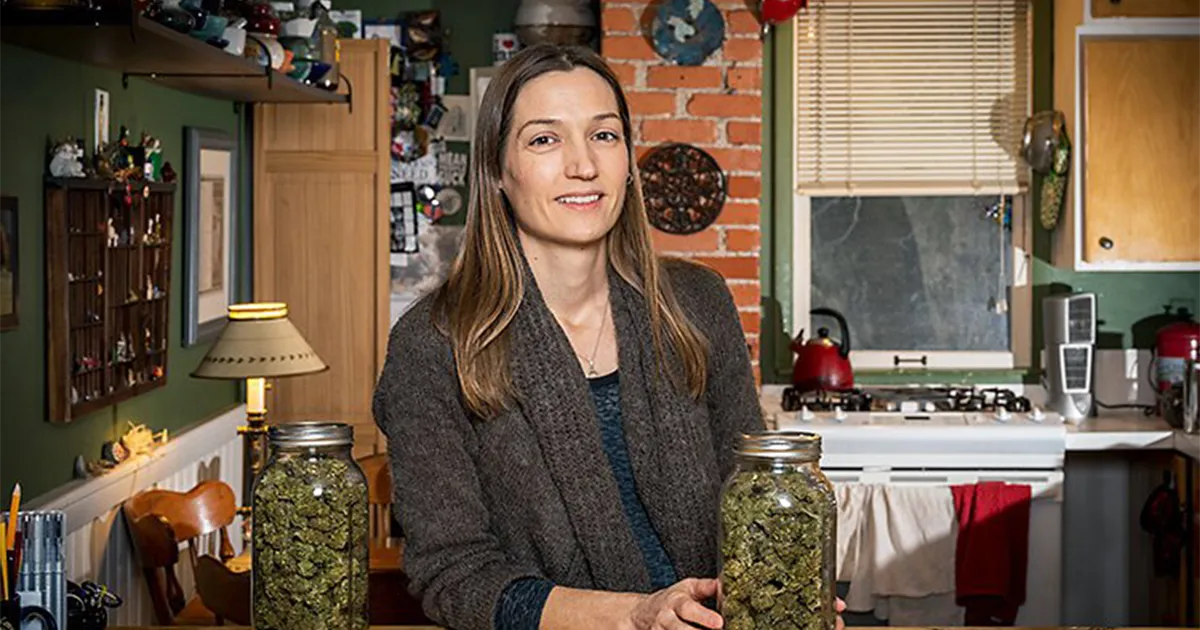
The foundation of a thriving hemp farm isn’t found in bags of fertilizer or bottles of pesticide—it’s alive, microscopic, and working 24/7 beneath your feet. On a recent episode of the iHemp Hour, Robin Pott, co-founder of Pot Farms L3C, a regenerative hemp company in Willis, Michigan, pulled back the curtain on the soil food web and demonstrated why cultivating microbial life may be the most important decision a hemp farmer can make.
Host Dave Crabill of iHemp Michigan was joined by co-host Blaine Bechtold and Mike Brennan for an episode that delivered both mind-expanding science and practical applications for farmers looking to reduce costs, increase yields, and build long-term resilience into their operations.
The Soil Food Web: A Hidden Universe
Before diving into practices, Pott grounded the audience with some startling biology: 70-90% of the cells in and on your body are microbial life that isn’t your DNA. And more than 99% of known microbes are harmless to humans—either benefiting us or simply coexisting.
This perspective shift is essential, Pott explained, because regenerative farming fundamentally depends on understanding and nurturing microbial life.
“Regenerative farming is cultivating the soil microbial life so that your plants can take care of themselves.”
The Cast of Characters
Using photos from her own microscope work (Pott is certified in soil biology testing through the Soil Food Web School), she introduced the key players:
Bacteria — The foundation of soil life. These single-celled organisms produce glues that attach themselves to organic and mineral matter, slowly decomposing it one nutrient at a time. They’re also the primary food source for nearly everything else in the soil food web.
Fungi — Responsible for decomposing more complex materials like woody matter, fungi build mycelium networks that physically pull together soil aggregates, creating structure. Perhaps most remarkably, fungi store carbon by shellacking the insides of their mycelium with it—visible as dark borders under the microscope.
Protozoa — These freshwater animals (amoebae, ciliates, flagellates) are the grazers. When bacteria and fungi consume nutrients, those nutrients become locked in their bodies. Protozoa eat bacteria and fungi, then release waste in plant-available form—completing the nutrient cycle.
Nematodes — Microscopic worms that come in four types:
- Bacteria feeders (beneficial)
- Fungi feeders (beneficial)
- Root feeders (harmful—these give nematodes a bad reputation)
- Predator nematodes (beneficial—they eat root feeders)
Microarthropods — Including mites and tardigrades (water bears), these multicellular creatures not only graze but also tunnel through soil, creating passageways for air, water, and roots.
Plants Are the Conductors
The most profound insight? Plants orchestrate the entire system.
“The organism that’s in charge are the plants. The plants are orchestrating the nutrient cycling.”
Through photosynthesis, plants produce specific sugars and carbohydrates called exudates that they release through their roots. These exudates function as signals and food for soil microbes. A plant needing potassium, copper, zinc, and calcium essentially broadcasts that request into the soil—and the microbial community responds.
Understanding Succession: Why Weeds Wake Up
Pott explained the concept of ecological succession—the natural progression from disturbed soil (dominated by bacteria, populated by weeds) through increasingly complex plant communities (grasses, shrubs, trees) toward old-growth forests (dominated by fungi).
Regenerative farmers aim for mid-succession soil: a balanced mix of bacteria and fungi that supports productive crops like vegetables, hemp, and row crops.
This explains a phenomenon every farmer knows: till a garden bed, and a week later you have weeds.
“If you had a balanced succession soil and you tilled it, your fungi levels dramatically decrease, your bacteria levels dramatically increase… and the seeds from weeds are gonna be like, ‘Oh hey, we’re in the right conditions to germinate.’”
The solution? Maintain mid-succession soil conditions, and weed seeds simply won’t wake up.
The Four Core Practices of Regenerative Farming
- Use Quality Compost
Well-made aerobic compost—with the right balance of browns and greens—inoculates soil with the full spectrum of soil food web organisms. Pott’s farm uses compost in multiple ways:
- Field application (as-is)
- Compost extracts (sprayed as soil soaks)
- Compost teas (brewed to multiply microbial populations)
- Mulch (keeps soil cool, moist, and adds CO₂ at plant base)
Key tip: Apply compost on top of soil, not buried, to prevent anaerobic conditions.
For farms without livestock, Pott noted that animal manures incorporated into composting systems serve as the “animal component” that regenerative agriculture often calls for.
- Reduce Tillage
This doesn’t mean absolute no-till—it means minimizing disturbance and understanding that when you do disturb soil, you’ll need to rebuild it.
Pot Farms’ preferred method is sheet mulching:
- Reclaimed cardboard as the base layer
- Wood chips on top (free from utility companies and tree trimmers)
- Compost raked into beds
Their “Mandala Garden”—a 50-foot diameter circular garden with repeating patterns—was built entirely through sheet mulching with zero tillage.
- Year-Round Cover Plants
The gold standard is establishing perennial cover plant mixes. Living roots in the soil year-round feed the microbial community continuously.
“The life in the soil is dependent heavily on the photosynthesis, the exudates that the plant is sending into the soil. Food for the microbial life is coming from living plants. When that food is cut off, the soil food web dramatically declines.”
Pot Farms tilled once to establish a 22-species mix of flowers, grasses, grains, and legumes—mostly perennials—that grows no higher than 18 inches. They mow through June, then let hemp plants grow above the “living carpet.”
- Cultivate Diversity (Polycultures)
More diverse plants mean more diverse nutrient cycling. Pott showed a photo of their understory that demonstrated strategic companion planting:
|
Plant |
Function |
|
Sweet alyssum & marigolds |
Attract beneficial insects |
|
Hairy vetch |
Fixes nitrogen (legume) |
|
Gourd vine |
Food production |
|
Comfrey |
Deep-rooted “dynamic bioaccumulator” that pulls nutrients up from lower soil horizons |
The result? No weeds. Between the diversity and the mid-succession soil conditions, weed seeds don’t find their preferred germination environment.
Building Resiliency: Farm, Business, and Beyond
On the Farm
Water Retention — Soil with good aggregate structure holds water in the spaces between clumps, rather than letting it run off compacted surfaces or drain straight through.
Nutrient Retention — When water stays, so do nutrients—no leaching to bedrock or runoff to waterways.
Nutrient Cycling — The decompose-graze-release cycle keeps nutrients plant-available without synthetic inputs.
Pest & Disease Resistance — Healthy plants with access to complete nutrition can defend themselves.
Weed Suppression — Mid-succession soil doesn’t trigger weed germination.
Carbon Sequestration — Fungi physically store carbon in their mycelium walls, visible under microscopy as dark borders.
For Your Business
The financial implications compound:
- Reduced/eliminated irrigation costs
- No fertilizer expenses
- No herbicide costs
- No pesticide costs
- Lower labor requirements
- Higher yields
Pott shared dramatic proof: their largest 2021 hemp plant weighed more than 20 pounds—grown from a seedling planted in their fourth-season Mandala Garden with established living soil. The only intervention? Occasional irrigation during dry spells.
Pot Farms: A Unique Business Model
When asked about their L3C (Low-Profit Limited Liability Company) structure—a hybrid entity available in Michigan that combines elements of for-profit and nonprofit organizations—Pott explained two key benefits:
- Foundation fundraising eligibility without losing nonprofit protections for donors
- Legal protection to prioritize three bottom lines: profit, people, and places
“Any for-profit business as a legal entity in the eyes of the law are mandated to maximize profit… The L3C carves out this little exception saying you are allowed to make money and not focus completely on profit, but you can also prioritize people and places.”
This structure protects Pott from investor pressure to maximize profit at the expense of her mission: regenerative farming and job creation for youth from disadvantaged backgrounds.
The company began in 2017 planning for marijuana cultivation (hence the name), pivoted to hemp when it became legal in 2019, and maintains long-term plans to pursue cannabis licensing—possibly as a micro business destination farm where visitors can consume on-site.
Industry News Highlights
🌱 Hemp History Month
June marks Hemp History Month, celebrating the plant’s traditional role in American agriculture (grown by Washington and Jefferson) and advocating for its modern renaissance.
🏭 Major Fiber Processing Coming to the Midwest
Dun Agro Hemp Group, a Dutch company with 28 years of European hemp industry experience, announced plans to establish North American headquarters and processing facilities in Indiana, with operations expected by mid-2023. The vertically integrated operation will produce hurd, fiber, and other materials for wide-ranging applications.
“We’re excited for Indiana, we’re jealous,” Bechtold said, expressing hope the facility locates near the Michigan border so Michigan farmers can participate.
⚖️ Federal Court Confirms Delta-8 THC Legality
A federal court ruling confirmed that Delta-8 THC is federally legal and wasn’t excluded from industrial hemp production under the 2018 Farm Bill. This is significant news for Michigan, where regulatory uncertainty had threatened businesses working with Delta-8 products.
🔬 Midwest Hemp Research Collaborative
Reminder: 2022 applications are due July 16th for the research collaborative tracking which hemp varieties perform best in the region. Participants may receive discounted testing, and all data contributes to a crucial database for farmers.
🗳️ Public Opinion Shifting
New surveys show approximately 80% of Americans oppose cannabis prohibition—a dramatic shift that advocates hope will finally move Congress to act on federal legalization.
🏨 Cannabis Tourism Growing in Michigan
With tourism as Michigan’s #2 industry and cannabis as the #3 cash crop, entrepreneurs are building infrastructure for cannabis-friendly travel. Northern Michigan dispensary chain Dune Grass is launching cannabis tourism campaigns, while Michigan Go works statewide to connect cannabis-friendly accommodations and businesses.
Resources for Further Learning
Robin Pott offers several services through Pot Farms:
- 🔬 Soil biology testing (microscope-based assessment)
- 🌿 Consultations on regenerative practices
- 🧫 Compost sales for soil inoculation
Website: potfarms.com Social Media: Active on Facebook, Instagram, and LinkedIn
Free Educational Resources:
- Soil Food Web School
- Regenerative Soil Conference
- Permaculture networks
- Regenerative agriculture groups on social media
Large-scale examples exist: 750 acres in Indiana, several thousand acres in Montana—proving these principles scale beyond small farms.
Upcoming Events
📅 July 8-9 | Hempcrete Workshop 📍 Chelsea, Michigan 👷 Led by Kim Crows of Fiberfork Two-day hands-on workshop on hemp building materials
📅 July 9 | Canna Bash Fest 📍 Muskegon, Michigan 🎫 VIP tickets: $125 (includes $400 grab bag) 🌐 cannabashfest.com
📅 July 16 | Midwest Hemp Research Collaborative Application Deadline
📅 July 30 | Pennsylvania Hemp Festival 🕙 10 AM – 10 PM Children’s discovery zone, farming forum, speakers, live music
📅 June 23 | Next iHemp Hour Special episode on hemp building materials featuring Kim Crows, plus updates on hempcrete building code inclusion from USHBA representatives
Recipe of the Week: Strawberry Hemp Smoothie 🍓
Courtesy of Blaine Bechtold and Down on the Farm
It’s strawberry season in Michigan! This protein-rich smoothie showcases hemp seeds as a nut-free alternative while delivering omega-3 fatty acids.
Ingredients:
- 2 cups strawberries (fresh or frozen—frozen makes it thicker)
- 1 frozen banana, broken into pieces
- ½ cup water
- 3 tablespoons hemp seeds
- 1 tablespoon vanilla extract
Instructions: Blend all ingredients until smooth. Top with additional hemp seeds for presentation.
Get your hemp seeds: downonthefarm.biz
The underground world Robin Pott revealed isn’t science fiction—it’s the foundation of agricultural systems that sustained humanity for millennia before synthetic inputs existed. For hemp farmers facing tight margins and unpredictable markets, cultivating this living soil may be the most reliable path to resilience.
As Pott demonstrated with her 20-pound hemp plant, when you give plants access to a thriving soil food web, they don’t just survive—they thrive beyond expectations.
Growing the future from seeds of the past.