Hemp Lime (Hempcrete) Building’s Watershed Moment
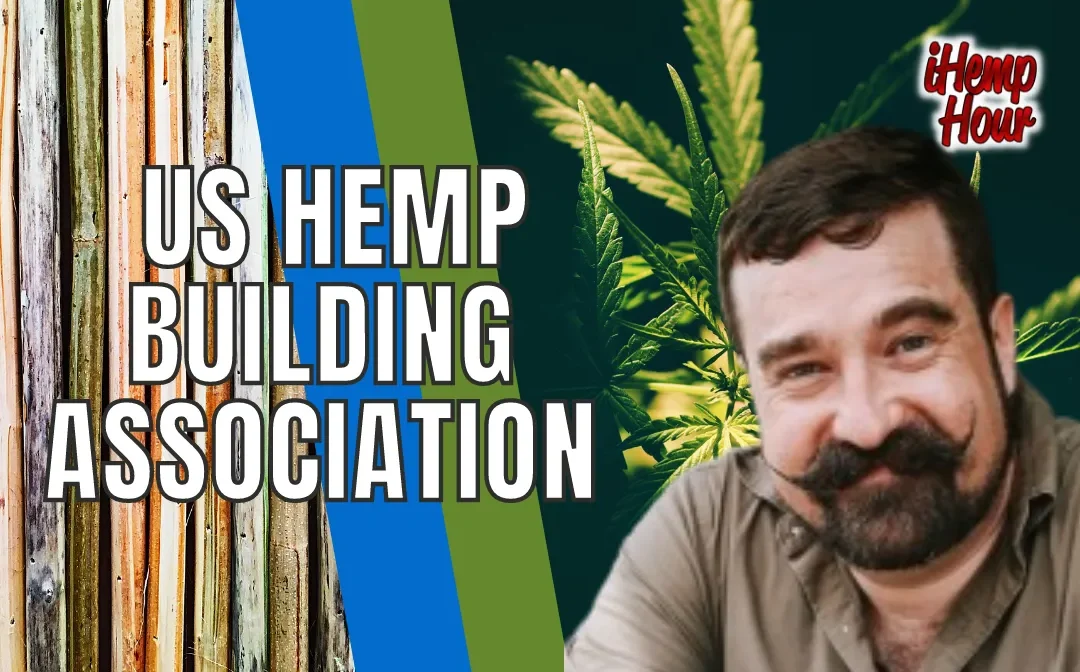
In a pivotal episode of the iHemp Hour, iHemp Michigan’s Dave Crabill and Blaine Bechtold sat down with Jacob Waddell, Executive Director of the US Hemp Building Association (USHBA), to discuss the organization’s historic push to get hempcrete accepted into the International Residential Code (IRC) — and what it means for the future of sustainable construction.
First: An Update from Ukraine
Before diving into building codes, Jacob shared a sobering update on USHBA board member Sergey Kovalenkov, a founding member of the organization currently in Ukraine amid the ongoing conflict.
“Sergey was in Kyiv. He got his family to the western part of the country, and they have successfully crossed the border into Romania. Sergey himself is still in Ukraine… trying to help people get from the east to the west.”
The USHBA board has deep connections to Ukraine — another director, Alona Thompson, is a Ukrainian citizen with family in eastern Ukraine. For those wanting to support Sergey directly, donations can be directed through his brother Max Kovalenkov.
It’s worth noting: Ukraine has been building with hempcrete for years. As Jacob pointed out, “They were able to grow it before we could, so they were able to develop a lot faster.” Perhaps hempcrete will play a role in Ukraine’s eventual rebuilding.
The Big News: IRC Code Submission
The USHBA submitted hempcrete as an appendix to the International Residential Code in January 2022. In just two weeks from this recording, a group traveled to Rochester, New York for the Committee Action Hearing — their opportunity to defend the submission.
“At the end of that meeting, it’ll end with one of three results: approval, approval with modifications, or disapproval. We’re hoping for approval with modifications because we’ve seen a typo we need to fix.”
If approved, the timeline looks like this:
- June 20th: Public comment submission deadline
- September: Vote on any public comments (St. Louis)
- October: Official approval
- 2024: Release in the new IRC
But Jacob was clear-eyed about the challenges ahead:
“States have and even counties have specific rules that they approve. There’s a delay often in acceptance… I know counties in Tennessee who just started using the 2018 IRC. That’s a three-year delay.”
Translation: Even with IRC acceptance, state-by-state advocacy will be essential. But this is the critical first step.
How People Are Building with Hempcrete Now
Currently, builders use an Alternative Material Variance — essentially proving the material works as well or better than accepted materials.
“It’s not actually that big of a threshold to me, but it usually causes a delay. I’ve heard on average about three months.”
Code acceptance would eliminate this extra hurdle, streamlining the already complex permitting process.
The Science of Hemp-Lime Binders
Jacob provided an excellent breakdown of how hempcrete actually works. It’s not just “lime, water, and hemp hurd” — it’s more nuanced:
Two-Part Reaction System:
- Water-reactive component (pozzolan + lime): Provides quick-set strength in the first days/weeks
- CO2-reactive component (lime carbonization): Reabsorbs carbon over time
“The more that reacts with water, usually the more strength you’ll end up with. But the lower the vapor permeability — and vapor permeability is essential for the way hempcrete interacts.”
This is why hempcrete “breathes” — managing moisture and providing those remarkable hygroscopic properties that regulate indoor humidity. Too much strength equals less breathability. Balance is everything.
The Hemp Fiber Processing Pain Point
For Michigan farmers and processors, this was the reality check:
“Right now, the majority of hemp hurd created in the United States is not what we would say is building grade.”
The issues? Dust and fiber clumps — long fibers attached to hurd pieces that clump during mixing, creating pockets in walls and moisture problems.
The USHBA is working on:
- ASTM testing standards for hemp hurd
- A guide for creating data sheets to accompany hurd products
- Standards that help buyers select proper building-grade material
And here’s the catch-22Jacob articulated perfectly:
“For us to thrive, we need the fiber and grain industry to thrive… hurd is a by-product or co-product. It’s not the primary money maker. The primary money maker is either fiber or possibly grain.”
This is why USHBA supports initiatives like HempExemption.com — legislation to exempt grain and fiber producers from THC testing requirements that add cost and complexity.
Cast, Spray, or Precast?
Jacob broke down the three main application methods:
| Method | Pros | Cons |
| Hand Cast | Low upfront cost, low technical needs | High labor, high time, long drying |
| Spray Applied | Less labor, faster application | Equipment cost, still has drying time |
| Precast | No drying time on-site | Most expensive currently |
Curing time to apply finish? Four to eight weeks typically, until wall moisture drops below 20% relative humidity. This is why precast systems — blocks and panels dried before they hit the job site — are generating so much interest.
Can CBD Stalks Be Used?
A common question, and Jacob’s answer was nuanced:
“There are certain people that will tell you nope, you can’t use CBD in any of these building materials. A lot of that comes from complications in modern decortication.”
The reality? They’ve used both fiber and CBD-derived hurd on projects, sometimes side by side. The result?
“The binder made a bigger effect than whether the hurd came from fiber or CBD.”
More research is needed, but this is encouraging news for farmers with CBD biomass looking for alternative markets.
How to Get Involved
The USHBA needs support — both financial and volunteer:
Donate: Visit USHBA.org and click “Donate to USHPF” (US Hemp Building Founders Foundation)
Funding Priorities:
- ASTM E119 fire testing for code acceptance
- Structural benefit testing
- IBC (commercial code) proposal development
- Carbon credit calculations
- Training courses and workforce development
- Best practices documentation
Volunteer: The organization needs help with marketing, communications, and various operational tasks. There’s also mentorship opportunities for those entering the industry from university.
“It’s going to take an army. We’ve got a lot of work to do yet. It’s going to take years for this market to develop and mature. But it’s an opportunity too — especially for young people to get involved.”
The Bottom Line
Hemp building is at an inflection point. The IRC submission represents years of work and could open doors that have been closed since prohibition. But as Jacob emphasized, this isn’t just about building codes — it’s about developing an entire supply chain, from fiber processing to standardized materials to trained workforce.
“Really moving into the real building industry and not being a niche — which we are right now.”
Join us at the 2022 Midwest iHemp Expo, May 20-21 at the Lansing Center, where Jacob Waddell and other hemp building experts will be presenting. We’ll also have Matt Moreno discussing his innovative precast panel systems. Early-bird pricing available now at MidwestiHempExpo.com.