From Farm Field to Finished Goods: How Heartland Hemp Company is Engineering Michigan’s Sustainable Future
This article was originally published in January 2022 based on an iHemp Hour interview with Heartland Industries. Shortly after this interview, Heartland cancelled their Michigan hemp farming expansion after investors withdrew. The company failed to fulfill lease contracts with approximately 20 Michigan farmers who were promised $250 per acre, leaving them scrambling to secure alternative crops. Heartland has since pivoted away from vertical integration to focus on product development. We’re publishing this interview for its educational value regarding hemp fiber applications in plastics, but readers should be aware of this subsequent history. iHemp Michigan remains committed to transparency and supporting Michigan farmers.
Hemp fiber isn’t just an alternative—it’s the material science breakthrough that could reshape American manufacturing. And Michigan is positioned to lead.
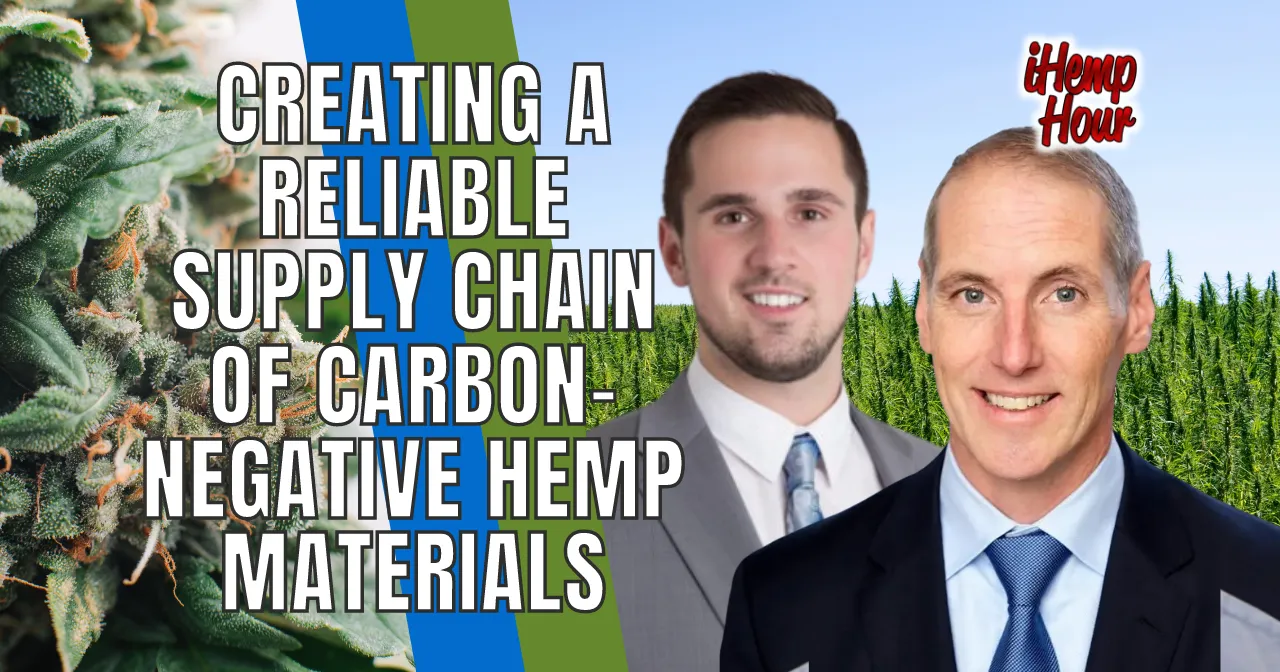
When Tim Almond and Eric Austermann from Heartland Industries joined us on iHemp Hour in early 2022, they shared an ambitious vision for hemp fiber in the plastics industry. While their farming plans ultimately didn’t materialize as described, the conversation remains valuable for understanding hemp’s potential in advanced manufacturing.
Why Michigan for Hemp Plastics?
Here’s a statistic worth noting: more than 60% of injection molding capacity in North America sits within 100 miles of the Great Lakes.
Michigan has been the heart of advanced manufacturing for over a century. As sustainability mandates reshape corporate supply chains, the state is well-positioned for hemp-based material innovation.
“This is the number one state for advanced manufacturing,” Tim explained during our conversation. “If you’re going to be setting up an industrial hemp supply chain to support the plastics and packaging industries, Michigan is the hot spot.”
The Science of Engineering Hemp for Plastics
Heartland’s focus wasn’t CBD or long textile fibers. Their innovation centered on micronizing hemp fiber and re-engineering it to bond with synthetic polymers.
“One of the things we learned very early on was that natural products just don’t blend well with synthetic polymers,” Tim shared. “There is something in between in the engineering process that allows the bonding of the two materials. That’s what we’ve really focused on.”
The potential benefits of hemp-based plastic additives include:
- Reduced petroleum-based material usage
- Meeting sustainability mandates
- Products that appeal to environmentally conscious consumers
- Potential carbon offset in supply chains
The USDA Carbon Research Grant
One highlight from our conversation was Heartland’s USDA grant to study hemp’s impact on soil carbon and regenerative farming practices.
The three-year project was designed to span approximately 100-200 acres across 10 states, with plots of 5-10 acres each. The goal: quantify data that could unlock carbon credit opportunities for hemp farmers.
“It’s all about the data,” Eric emphasized. “We want to demonstrate that industrial hemp cultivation with regenerative practices is a scalable climate-smart agricultural system.”
The team was working with industry veterans including Corey Vander Swaag, Rusty Peterson, and Christy Apple to facilitate the network of agronomists across participating farm locations.
Who’s Interested in Hemp Plastic Additives?
Heartland’s direct clients were chemical companies—those producing or compounding plastics. The end customers driving demand are OEMs (Original Equipment Manufacturers) across multiple industries:
- Automotive – Michigan’s bread and butter, with high-end vehicles already exploring natural fiber composites
- Aerospace – Premium applications where sustainability stories matter
- Marine – Experiencing supply chain bottlenecks, making alternative materials attractive
- Industrial Packaging – A rapidly growing segment
The Education Gap Remains Real
One of the most telling moments came when Eric shared his experience with USDA officials.
“I was on a call with the USDA today, and they were just fascinated about the use cases for industrial hemp. They had no idea.”
When the grant was initially awarded, USDA officials had labeled the project as a “cover crop” study. Eric had to clarify: “No, we’re going to grow this and actually use it in industrial applications.”
Their reaction? “They perked right up.”
This underscores a point that remains true today: education is our biggest challenge and greatest opportunity. From federal agencies to Fortune 500 procurement departments, the story of industrial hemp’s potential is still being written.
The Three-Stage Separation Problem
Industrial hemp faces a unique branding challenge requiring three distinct separations in the public mind:
- Hemp from Cannabis – CBD did much of this heavy lifting
- Industrial Hemp from CBD – This remains the current frontier
- Fiber/Grain from Flower – Critical for manufacturing adoption
“A lot of the clients we work with, they hear the word flower and they panic. They think cannabis,” Tim explained. “It’s a lack of education. They just don’t know that these things are different.”
The Branding Lesson: No Hemp, No Green
Heartland deliberately kept “hemp” out of their company name and avoided green in their branding.
“We were very specific. We kept hemp out of the name and stayed away from the color green,” Tim explained. “The deep red was very intentional to try and separate in that way.”
It’s a pragmatic approach when selling to chemical companies and Fortune 500 manufacturers. The goal is material science innovation, and branding should reflect that.
We’ve experienced this friction firsthand at iHemp Manufacturing, where simply having “hemp” in the business name triggered high-risk categorization at banks—for selling outdoor sporting goods! The bank wanted to know THC levels in our frisbees.
The Economics Reality Check
Mike Brennan raised an excellent point during the show: cannabis industry players want hemp-based, biodegradable packaging. It aligns with their environmentally conscious customer base.
So why isn’t it happening faster?
Economics. Traditional plastic costs roughly $1.25 per pound. Bioplastics? Around $7 per pound.
“No matter how much you want to be sustainable, it’s difficult at those price tags,” Tim acknowledged.
Heartland initially explored bioplastics—actually replacing the plastic itself—but found too much friction. The additive approach provides an easier on-ramp: you’re not replacing plastic entirely; you’re improving it with a sustainable component.
The Carbon Opportunity
Over 2,000 companies have committed to carbon neutrality. They won’t achieve those goals without finding ways to offset their current carbon footprint.
Eric spent 26 years in manufacturing, including 15 years building sustainability strategy for a company with 100 facilities in 30 countries. His takeaway?
“I struggled in those days trying to convince people to make bold commitments around sustainability. We always had to find something that cost less, was equal in specs, and didn’t cost as much. Could never find that silver bullet.”
When he saw industrial hemp emerging from the 2018 Farm Bill, he recognized the opportunity: “If I had this 15 years ago, I probably could have made a lot more impact.”
What About Other Natural Fibers?
We asked whether Heartland might expand into other natural fibers like flax or kenaf. Tim’s answer was illuminating:
“Natural fibers outside of hemp have been legal forever. But for some reason, no one’s ever adopted them. I always ask myself why.”
His conclusion: there’s something uniquely compelling about industrial hemp. The carbon story has been effectively tied to it in ways that other natural fibers haven’t achieved.
Lessons Learned for Michigan’s Hemp Industry
While Heartland’s Michigan farming plans didn’t come to fruition—leaving 20 farmers without the promised contracts—the conversation highlights several enduring truths for our industry:
- The opportunity is real. Hemp fiber additives for plastics represent a legitimate market opportunity, especially as sustainability mandates increase.
- Education remains critical. Even the USDA needed education on industrial hemp applications. We have work to do.
- Vertical integration is hard. Heartland’s pivot away from farming to focus on “product/market fit” reflects the challenges of building an entire supply chain from scratch.
- Farmers need protection. When companies make promises to farmers, those commitments matter. iHemp Michigan will continue advocating for fair treatment of growers.
- The market is still developing. Price points, supply chains, and buyer education all need to mature before hemp fiber reaches its full potential.
The Path Forward
Despite setbacks like the Heartland situation, the fundamentals remain strong for hemp fiber in Michigan:
- World-class manufacturing infrastructure
- Growing corporate sustainability mandates
- Increasing consumer demand for sustainable products
- Ongoing research into hemp’s carbon sequestration potential
The key is building this industry responsibly—with realistic expectations, solid contracts, and genuine partnerships between farmers, processors, and manufacturers.
Also in This Episode
Michigan Cannabis Market Update: Mike Brennan reported that Andrew Brisbo, Director of the Michigan Marijuana Regulatory Agency, announced 2021 sales figures: approximately $1.8 billion in combined adult-use and medical marijuana sales, generating about $250 million in taxes. Brisbo projected 2022 could reach $2.8 billion.
Oregon State Hemp Research: Exciting news on hemp compounds (CBGA and CBDA) showing ability to prevent coronavirus from entering human cells.
Upcoming Events (from original broadcast):
- Hemp Today – Growing and Marketing Industrial Hemp at McHenry County College Conference Center, Illinois
- NOCO Hemp Expo in Denver
- 2022 Midwest iHemp Expo at the Lansing Center
Recipe of the Week: Cauliflower Hemp Soup – perfect for cold weather! Ingredients include olive oil, garlic, onion, cauliflower, vegetable broth, hemp hearts, parmesan, and parsley. Quick, easy, and nutritious.
Join the Movement
The industrial hemp revolution requires education, advocacy, and a strong community. It also requires learning from setbacks and holding ourselves accountable.
Join iHemp Michigan today and become part of the network building this industry the right way—with transparency, integrity, and unwavering support for Michigan farmers.
Visit iHempMichigan.com to become a member, access our business directory, and stay informed on the latest developments.
Because wellness for people and planet through hemp—it begins with the farmer.