From “Nice to Have” to “Must Have” — Certification, Compliance, and the CBD Road Ahead
This week’s iHemp Hour cut through the noise on the most important question facing CBD brands and hemp manufacturers: how do you prove—consistently—that your products are safe, compliant, and trustworthy as regulation tightens?
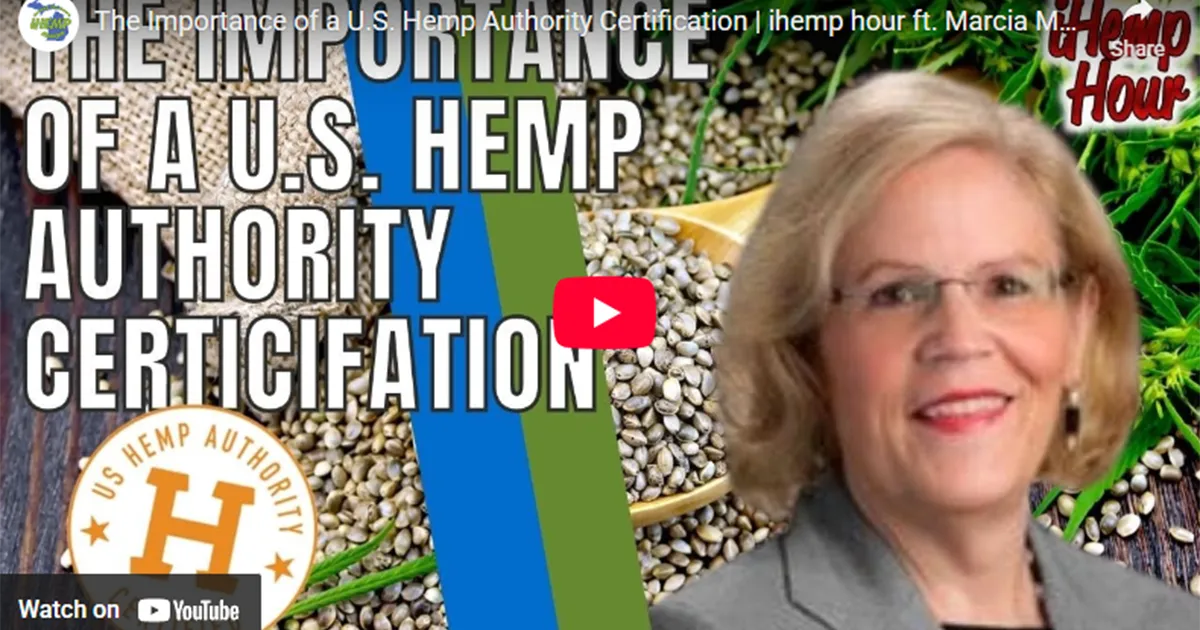
Marsha Mole, Executive Director for Hemp, CBD, and Dietary Supplements at Food Chain ID, walked us through the playbook behind the US Hemp Authority Certification (Version 3.0) and what it takes to operate like a modern supplement or food company. Translation: if you want to stay on shelves and win bigger accounts, third‑party validation is shifting from “nice” to “non‑negotiable.”
What regulators are watching now
- Claims: No disease or drug‑style claims. Use appropriate structure/function language (e.g., “supports joint health”) and include required warnings. Never market to vulnerable populations (e.g., pregnancy) without evidence and approvals.
- Labels: Quantified cannabinoid content must match what’s in the bottle through shelf life; stability data supports your expiry date.
- Testing: Use ISO/IEC 17025‑accredited labs and qualify them annually. FDA spot checks have found label variances and contaminant issues—don’t let that be your brand.
- Facilities: Current Good Manufacturing Practices (21 CFR Part 111 for supplements; relevant sections of 117 for food) are the standard. Expect audits.
Why US Hemp Authority certification matters
- It’s industry‑led, modeled on cGMPs, and requires real documentation, third‑party testing, and surveillance of websites and labels.
- Retailers are increasingly asking for it. Consumers recognize it as an independent stamp that products match claims and meet strict specs.
- It reduces risk. Fewer surprises with inspectors, fewer “off‑shelf” moments with retailers, and a stronger foundation for interstate and international growth.
Practical guidance for brands and processors
- Get your paperwork right: written specs for ingredients and finished goods, batch records, change control, complaint/CAPA logs, and stability plans.
- Test what you claim: if you add melatonin, magnesium, or botanicals, verify those actives too—not just cannabinoids.
- Tune your claims: remove “pain,” “inflammation,” or disease language; use compliant structure/function wording and appropriate disclaimers.
- Bundle audits: Food Chain ID can combine USDA Organic, Non‑GMO, cGMP, and US Hemp Authority to save time and cost.
For farmers: you’re in the chain
As finished goods standardize, buyers will require upstream documentation—clean inputs, records, and compliant handling. Start now: field logs, harvest SOPs, drying and storage controls, transport records, and COA traceability. This is how you command better prices and long‑term contracts.
What’s next with iHemp Michigan
- August 25: Two member webinars (noon and 7 p.m.) with Food Chain ID on certification essentials and Q&A.
- January 20 (Lansing): In‑person training the day before the iHemp Midwest Expo to help your team operationalize these requirements.
- Ongoing: Member intros to certifiers, labs, and retail buyers; event discounts; and a Business Directory listing seen by thousands each month.
Bottom line: the market is maturing. Those who document, validate, and label with precision will capture the next wave of retail and withstand the return of federal rulemaking. Join iHemp Michigan to get the tools, partners, and advocacy that keep your business a step ahead.
Contact: info@ihempmichigan.com Directory & Membership: iHempMichigan.com