
Markets, Materials, and the Next Wave of Hemp Opportunity
If you want a snapshot of where hemp is heading—and how to make it pay—this week’s iHemp Hour delivered a fast tour through the markets, the labs, and the shop floor. From spent biomass as feed to powdered hurd in plastics, the story that emerged is clear: the hemp economy is diversifying beyond cannabinoids, and Michigan is well‑positioned to lead.
We opened with a reminder of who we are and why we’re here. iHemp Michigan exists to educate, inform, and promote industrial hemp. Membership isn’t just a badge; it’s leverage. As Mike Brennan noted on air, business members get a listing in our directory for just $100 per year—a steady stream of exposure in front of thousands of website visitors each month. Visibility matters when markets are shifting underfoot.
From Regulators to Retail Reality
Before diving into hemp, Mike brought context from “the other side of the 0.3”: Michigan’s cannabis regulator, Andrew Brisbo, discussed caregivers, testing, and the state’s stance on delta‑8 in a recent Michigan Marijuana Report interview. Prices in the adult‑use market are down sharply, volume is up, and the retail footprint continues to expand—400 shops and counting. The lesson for hemp operators? Regulatory posture and retail dynamics in cannabis echo into the hemp space: testing integrity, product safety, and credible labeling will determine who keeps the trust of consumers and the confidence of regulators.
A quick public service note also reminded us that safety is universal: a nationwide frozen shrimp recall ahead of the holiday underscored how supply chains live and die by quality controls. Hemp is no different.
Guest Spotlight: Seth Boone, PanXchange
Seth Boone, VP of Business Development and Head of Hemp Markets at PanXchange, brought the ag‑economist’s clarity to our biggest questions.
On cannabinoids, he drew the line between “quality you can move” and “inventory that lingers.” Clean biomass at 8%+ with low contamination is drawing a premium relative to the past year, while millions of pounds of low‑grade, wet‑baled material remain difficult to process profitably. Expect a split market, he said: the best material clearing at better prices; the rest trapped by cost, quality, and throughput limits.
Delta‑8 came up—its price volatility and regulatory uncertainty are reshaping buying behavior. Processors are reducing positions to avoid being caught with stranded inventory, and some national distributors are already shifting to other minor cannabinoids to sidestep the policy crossfire. The takeaway: risk lives in the delta‑8 supply chain; don’t build a business on a spigot that can be shut off without notice.
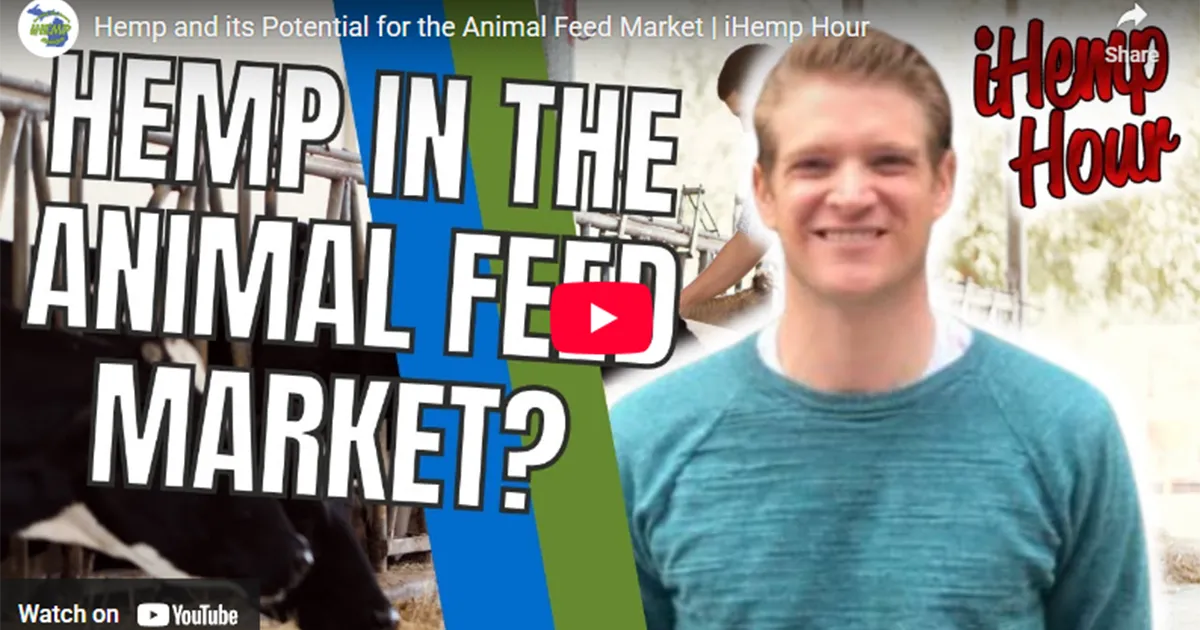
Animal Feed: The Near Term Beachhead
The most promising short‑to‑medium term win? Non‑food animals. Boone pointed to Montana’s move allowing hemp feed for non‑production animals as a practical launch point—horses, pets, and specialty segments where omega‑rich profiles are valued. Hemp meal may struggle head‑to‑head with soybean on price alone, but when you add omegas and functional benefits, you unlock premium niches. Think equine supplements, canine wellness, and aquaculture pilots. Price targets in the $500–$600/ton range for hemp meal begin to pencil when nutrition does more than protein alone.
He also flagged the potential of spent material—once solvent remediation and standards are nailed—as a low‑cost, high‑volume forage replacement. Early overseas work feeding stalks to sheep is encouraging; U.S. research and approvals will determine how quickly we can scale responsibly.
Fiber and Plastics: Michigan’s Edge
If you’re in Michigan, this is your lane. Boone was candid: textile‑grade fiber is coming, but the U.S. still needs consistent decortication, de‑gumming, and 24/7 plants to hit price and quality at scale. In the meantime, the “low‑hanging fruit” is already here:
- Short bast fiber (sub‑¾”) and powdered hurd (around 60‑mesh/250 microns) for plastics compounding and injection molding.
- Automotive interior applications (compression‑molded door panels, seat backs, liners), where European manufacturers have used bast fibers for years and U.S. R&D is accelerating.
- 3D printing filaments and small‑batch molded goods, where Michigan’s manufacturing base and prototyping culture shine.
This is where local supply chains win: less freight, faster iteration, and ready end‑users. Boone’s caution was practical: if a global brand places a million‑pound order tomorrow, the supply isn’t there this season. Start with the right‑sized partners now, build repeatable quality, and be the supplier of record when scale knocks.
Reality Check on Imports
Yes, Europe can ship hurd today, and many builders are importing because it’s cleaner and consistently packaged. But once U.S. processors run at volume—with vacuum‑packed hurd, bale‑standardized fiber, and domestic QA—the economic advantage flips. History says that when North American ag scales, imports struggle to compete on price and speed.
Michigan In Motion
We’re not just talking; we’re building.
- Networking and hands‑on learning: our July hempcrete workshop at the Critter Barn turns education into action—mixing, casting, and fundraising by “sponsoring a brick” to build an interior demonstration wall. It’s a kid‑friendly day that demystifies natural building and keeps the conversation local.
- Field days and forums in Indiana bring grain and fiber knowledge into focus—with plot tours, equipment demos, and panels that matter to the Midwest.
- The iHemp Midwest Expo returns to Lansing in January, our annual rally point for growers, processors, builders, and brands ready to lock in 2026 plans.
And yes, we’re still having a little fun: Frisbee Friday lives on with discs molded from hemp fiber‑reinforced polypropylene—Michigan innovation in the palm of your hand.
In the Kitchen: Why Hemp Milk Is Having a Moment
Plant‑based milks are mainstream, and hemp milk is breaking out. The nutrition story—complete protein, omega‑3 and omega‑6 balance—meets an uncomplicated process at home or in a commercial kitchen. A basic blend of hulled hemp hearts and water becomes a creamy base that takes fruit, spices, and sweeteners beautifully. It’s not a fad; it’s a format with staying power.
What This Means for Members
- Diversify the playbook. Don’t wait on one cannabinoid to save the quarter. Feed, plastics, and building materials are real revenue, right now.
- Invest in documentation. Whether it’s biomass COAs, fiber cleanliness specs, or herd particle size, the buyers who pay on time demand proof.
- Think like a supplier. Start small, deliver consistently, and grow with partners who match your scale. Michigan’s manufacturing ecosystem is your advantage—use it.
iHemp Michigan is here to make the path shorter: policy translation, market intelligence, buyer introductions, and a network that wants you to win. If you’re not in the Business Directory yet, consider this your nudge. A hundred dollars a year puts your operation in front of the people who are making moves.
Join us. Share this episode with a colleague who needs to hear it. And if you’re building something that should be on our next iHemp Hour, reach out—we showcase the work that moves hemp forward.