A Global View of Hemp’s Future: Insights from Kehrt Rayher of Hemp Today
While we focus on building a robust hemp industry here in Michigan, it’s crucial to remember that we are part of a rapidly evolving global movement. The challenges and innovations happening across the world offer a roadmap for our own success.
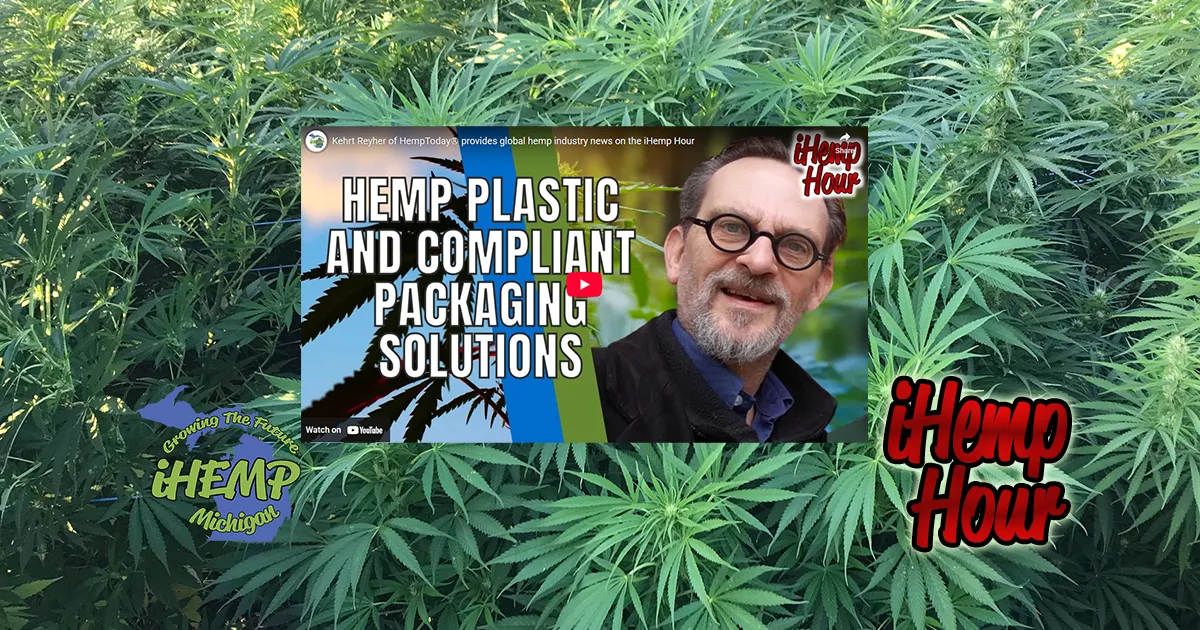
On a recent iHemp Hour, we were honored to broadcast live from the NOCO Hemp Expo and speak with Kehrt Rayher, founder of Hemp Today, the premier international source for hemp industry news. From his base in Poland, Kehrt has a unique vantage point on the trends shaping the future of hemp.
Here are some of the key insights he shared.
China’s Strategic Push into Advanced Hemp
While many associate China with textiles, their investment in hemp goes far deeper. Kehrt reports that the country is making a massive, strategic push into advanced applications.
- Dominance in CBD: Companies in China’s Yunnan province claim to be delivering nearly one-third of the total global supply of CBD.
- Advanced R&D: Beyond CBD and textiles, China is heavily invested in research and development for high-tech fiber materials, bio-composites, and even nanotechnology. They are exploring applications that merge hemp with traditional Chinese medicine, a huge and growing global sector.
Europe’s Path to a Standardized CBD Market
The regulatory landscape in Europe has been a complex patchwork, much like the U.S. However, a recent high court ruling that CBD should not be considered a narcotic has created a clear path forward.
CBD is now being regulated under the EU’s “novel food” regime. This requires significant investment in safety studies—the European Industrial Hemp Association is putting over three million euros into this effort—but it will ultimately create a normalized, legal market for CBD products across the continent.
Innovation in Fiber: From Textiles to Technology
For farmers and processors in Michigan, the most exciting developments are happening in the fiber and hurd space. Kehrt highlighted several game-changing innovations from around the world:
- Accessible Technology: Small-scale, affordable processing equipment is finally emerging. Kehrt mentioned micro-decorticators that cost around $15,000 and allow small operators to process stalks for applications like fire-starters and pellets. This type of accessible technology is critical for building out a decentralized processing infrastructure.
- Hemp Textiles are Back: Large mills in Pakistan are now blending hemp into denim for major export products, signaling a return of hemp to mainstream fashion.
- Smarter Harvesting: New harvesters are being developed in places like Lithuania and Latvia that are more efficient and affordable, with some models costing under $100,000.
The Future is Built with Hemp
Perhaps the most tangible innovation is in construction. While hempcrete infill is effective, it can be labor-intensive and messy. Kehrt showcased a French system of interlocking hemp blocks that functions like a kit. This dramatically speeds up construction, reduces labor costs, and makes hemp building a much more scalable solution for the housing market. An Australian-based team is already working to bring this technology to the United States.
A Lesson for Michigan
Kehrt’s perspective underscores a vital point: the future of hemp is diverse, technological, and global. While CBD has dominated the conversation, the real, long-term opportunity lies in whole-plant utilization. By staying informed on these international trends, we can ensure Michigan is positioned to become a leader in this new green economy.
To stay ahead of the curve and connect with the people building Michigan’s hemp future, become a member of iHemp Michigan today!