
Why Is Hemp Banking So Hard? A Financial Expert Explains
For hemp entrepreneurs, the obstacles don’t stop in the field or the lab. You can navigate complex cultivation regulations, build a brand, and find a market, only to face one of the most frustrating hurdles of all: getting shut down by your bank
Despite being a federally legal agricultural commodity, the hemp industry is still considered “high-risk” by financial regulators, leaving many businesses without access to stable, reliable banking.
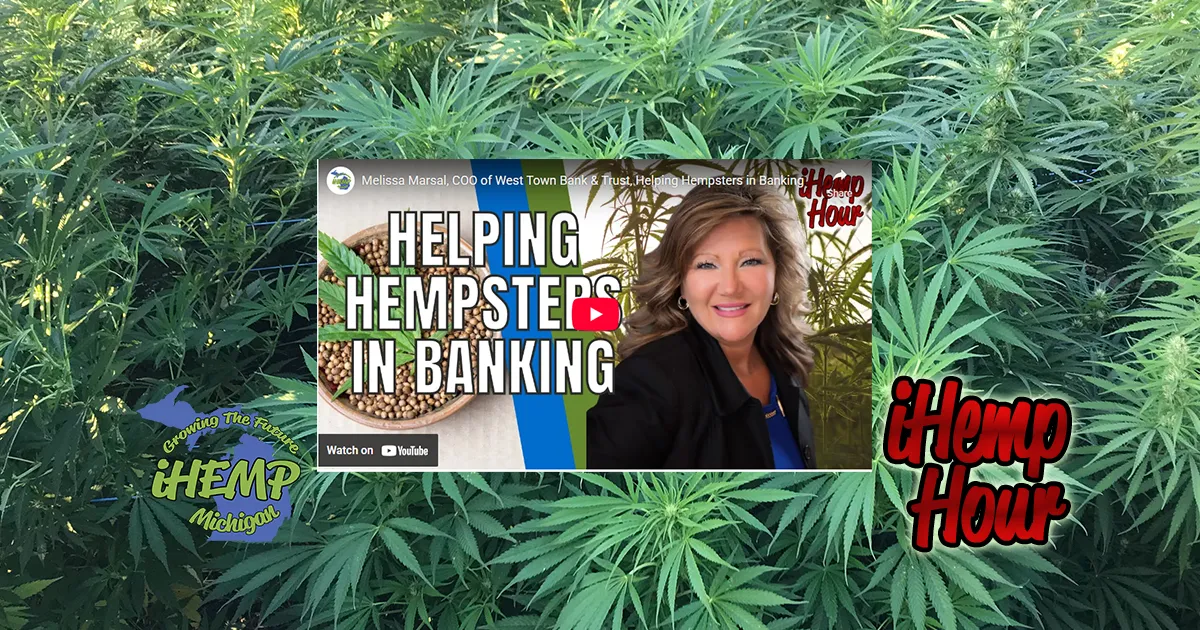
On a recent iHemp Hour, we sat down with Melissa, the Chief Operating Officer of West Town Bank & Trust, a financial institution that has leaned into this challenge. She explained why banking is so difficult for hemp and how legitimate businesses can find a true financial partner.
Here are the key takeaways.
The Problem: It’s Not About Legality, It’s About Compliance
Mike Brennan of the Michigan Marijuana Report asked the question on every operator’s mind: if hemp is legal, why are the big banks still shying away?
Melissa explained that it comes down to regulatory oversight. Because of its association with cannabis, the hemp industry falls into the same high-risk category as money service businesses or alcohol and tobacco. This triggers an extra layer of scrutiny for the bank.
“That means you’ve got to have a program, you’ve got to know your customer, you’ve got to do enhanced due diligence,” Melissa noted. “There is another layer on top of that, and they just don’t want to do it.”
For large national banks, the cost of adding specialized staff, software, and compliance programs for a niche market isn’t worth the effort. For entrepreneurs, this results in frozen accounts and sudden shutdowns
The Danger of “Don’t Ask, Don’t Tell”
Many business owners try to fly under the radar, hoping their bank won’t notice the nature of their business. Melissa warns this is a losing strategy.
“Don’t take the chance. Just find a hemp-friendly bank so that you know you’re not trying to do your business and tomorrow you’re shut down because they figured out in the background that you’re doing hemp,” she urged. “They’re on to you taking ‘hemp’ out of your name… that’s going to eventually catch up.”
A bank that doesn’t ask questions about your hemp business isn’t doing you a favor; they’re simply unaware, and their inevitable discovery will disrupt your operations at the worst possible time.
What a True Hemp Banking Partner Looks For
A bank that welcomes the hemp industry isn’t trying to police it; they are trying to build a compliant and sustainable partnership. To do that, they need you to come prepared. Be ready to provide:
Business Documentation: Licenses, business plans, and financials.
Product Verification: Certificates of Analysis (COAs) for your products.
Compliance Details: FDA disclaimers and age verification on your website if you sell CBD products.
“We’re not going to bank you just because you’re a hemp customer, but we’re not going to turn you away just because you’re hemp,” Melissa stated. The key is to treat your operation like any other legitimate business.
Finding a Full-Service Solution
A true banking partner offers more than just a checking account. West Town Bank, for example, built a comprehensive program that includes:
Merchant Processing: The ability to accept credit card payments online and in-person, a major hurdle for CBD and hemp retailers.
Treasury Management: Full online and mobile banking services.
Lending Opportunities: Access to PPP, USDA, and SBA loan programs.
By providing these solutions, they help remove cash from the equation, creating a safer and more transparent environment for everyone.
What You Can Do
The ultimate solution is clear federal legislation. The SAFE Banking Act would provide the legal safe harbor that banks need to service the industry without fear of reprisal. Even more impactful would be H.R. 841, a bill that would classify CBD as a legal dietary supplement, opening the floodgates for investment and commerce.
We urge all our members to visit HempSupporter.com to easily contact your representatives and ask them to support this critical legislation.
For more expert insights and to connect with leaders who are moving Michigan’s hemp industry forward, become a member of iHemp Michigan today!